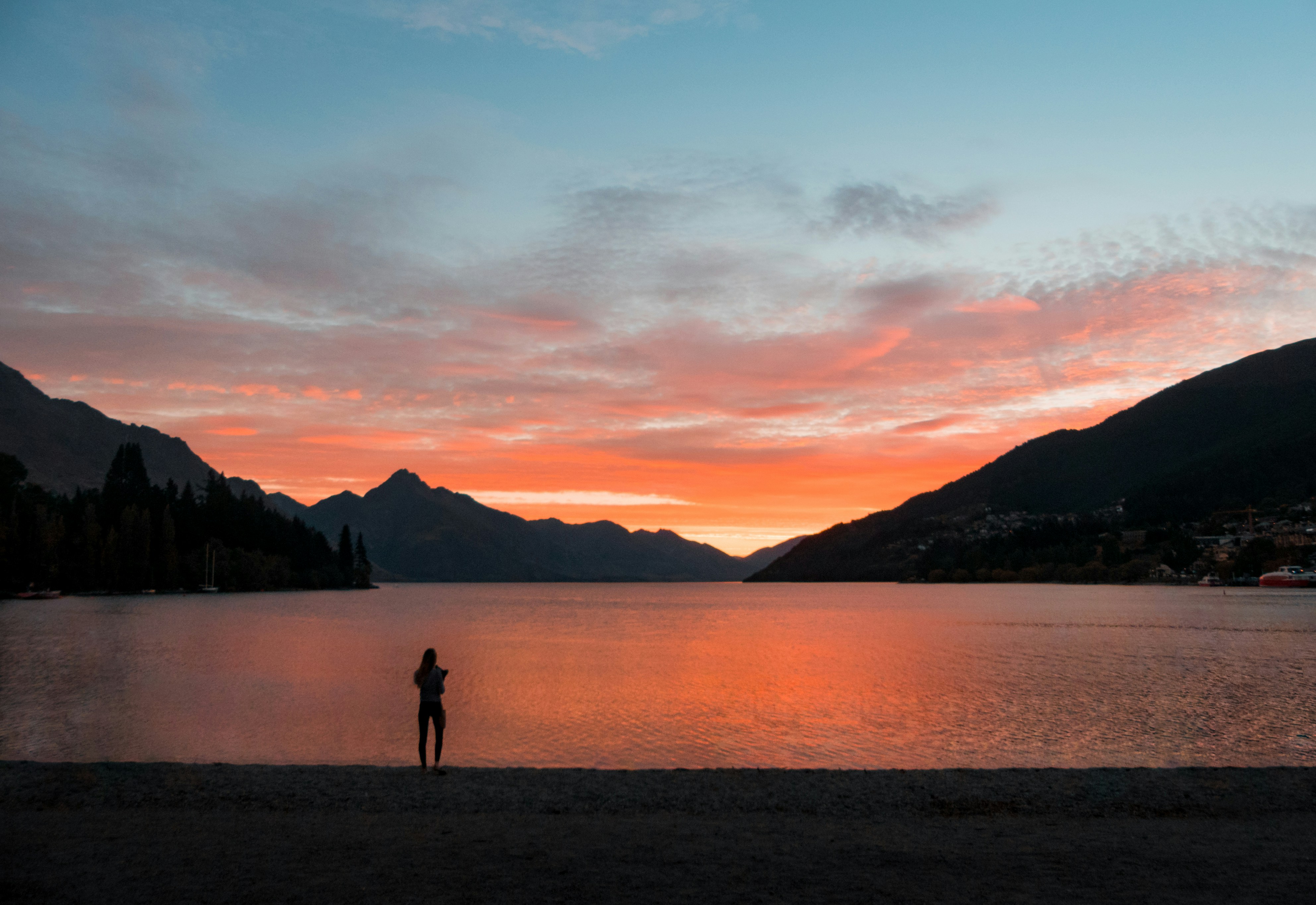
Think back to the last time you watched a sunset. I mean really watched it, from the first dip of the orange orb until the last purple smudge faded into grey. Most of us can’t remember. We’ve become a generation of “glancers.” We catch a glimpse of pink through a car window or through a 6-inch phone screen as we try to capture it for a story. We’ve stopped sitting still for the main event. But why? More importantly, what is the cost of looking away?

The “Efficiency” Trap
We live in a world that values productivity. A sunset takes twenty minutes, and in hustle culture, twenty minutes of sitting still feels like doing nothing. We’ve traded awe for efficiency. But our ancestors knew better. To the Ancient Egyptians, the sunset was a sacred change—the sun god Ra’s daily journey into the underworld. To Indigenous cultures around the world, it was a time of “The Great Silence,” a necessary pause to honor the earth. They didn’t see it as dead time; they regarded it as the most important appointment of the day.
The Biological “Handbrake”
When we stop watching the sunset, we confuse our bodies. Our eyes are made to witness the spectral shift, that moment when the harsh blue light of the day disappears and the warm, long-wavelength reds take over. The Sleep Signal: This red light is a biological trigger. It tells your brain to stop making cortisol (the stress hormone) and start producing melatonin. The Digital Lie: By skipping the sunset and staring at our LED lights instead, we are telling our brains it’s still 12:00 PM. We wonder why we feel wired but tired at 11:00 PM. It’s because we missed the sky’s natural bedtime story.
The “Awe” Deficit

There is a specific psychological state called awe, and the sunset is the easiest way to access it. Awe shrinks our ego. It makes our massive problems—an annoying email, a credit card bill, a broken faucet—look like tiny specs in the grand scheme of a burning sky. When we stop watching, we lose our perspective. We stay big, and our world stays small.
The Challenge: Be a “Sunset Rebel“
Tonight, when the light starts to turn honey-colored, do not reach for your phone. Do not try to save the moment for followers who aren’t there. Just sit. Watch the colors change from orange to pink to deep indigo. Feel the temperature drop. Notice the birds going quiet. Give yourself ten minutes of unproductive wonder. You might find that the world looks much friendlier once the stars come out.
Leave a Reply